Need emergency plumbing in Raymore?
Tell us what is leaking, backing up, or blocked. Send a request and Amazingglobal Plumbing will connect you with an independent provider in our network.
No obligationRequest an estimate from a local provider
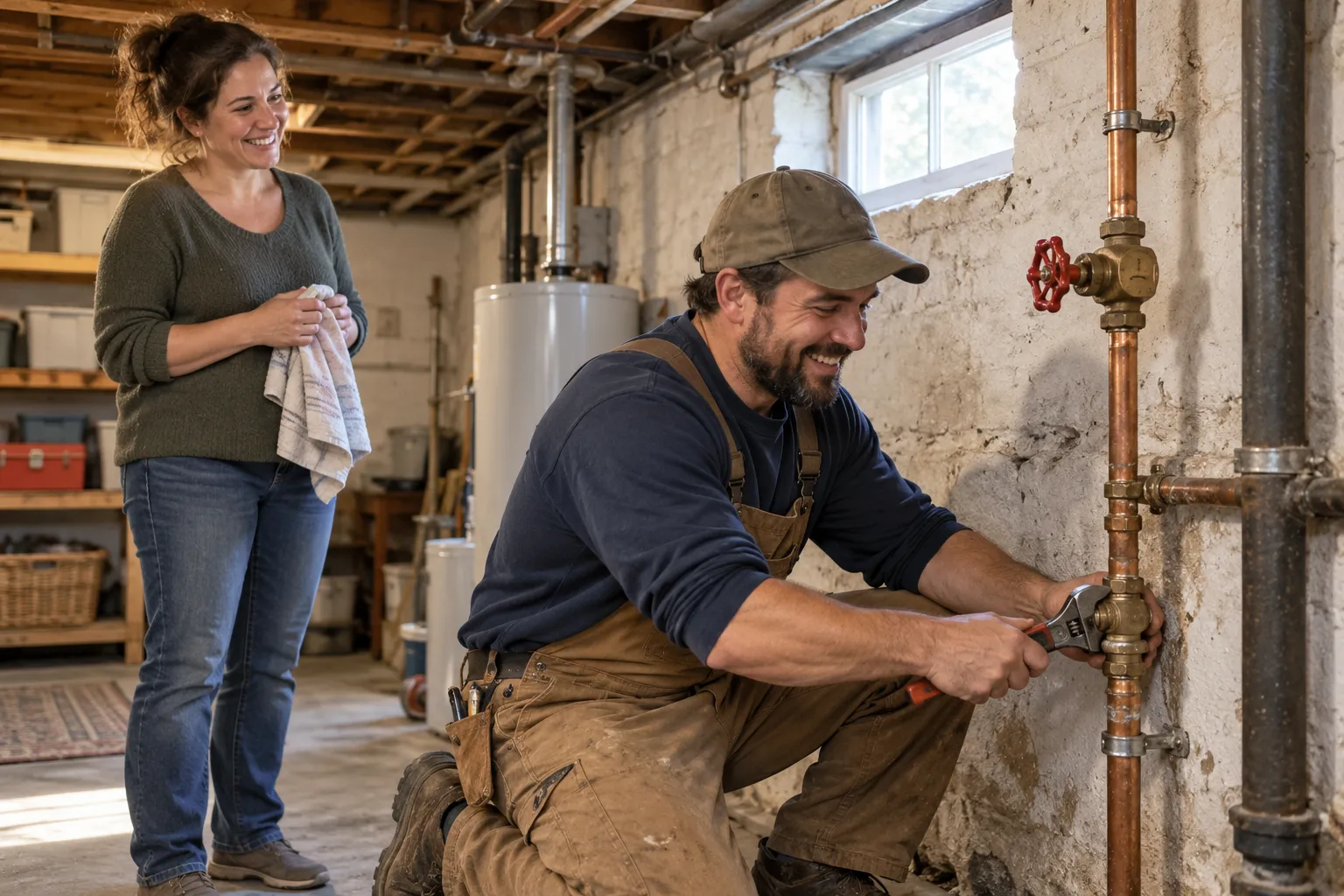
A plumbing emergency usually starts with a sound or a stain. A pipe splits, a drain backs up, or a water heater begins to leak. Your pipes work like the roads of a small town, and one blocked or broken stretch sends water down the wrong street. The first hour matters because you can do a few simple things to slow the damage.
Amazingglobal Plumbing is a referral service. We do not do plumbing work ourselves. We explain what is likely happening, walk you through the first steps, and connect you with independent providers in the Raymore area. Each provider sets its own availability, prices and terms. You can request an estimate, compare your options, and then choose what feels right for your home.
Take one slow breath. A leak looks dramatic, but the first hour comes down to a few small steps, done in order. Each step makes the next one easier, and it gives a provider a much simpler job when they arrive.
Your main water valve works like the master switch on a breaker panel. One turn stops everything downstream. In many local homes it sits on a basement wall, close to where the water line comes in. A round handle turns clockwise. A lever handle turns a quarter turn until it sits crosswise to the pipe.
Not every drip needs a rush call. These problems usually do:
If you smell gas, leave the house and contact your gas utility or emergency services first. Plumbing can wait until everyone is safe.
Pipes in a home hold water under pressure, often somewhere between 40 and 80 psi. Think of a garden hose with a small cut in it. The water does not trickle out, it shoots. A split in a pipe can release a surprising amount of water into walls and floors in a short time. Wet drywall, warped flooring and mold all follow the water, so stopping the flow early protects more of your house.
Work through these in order:
Water carries electric current the way a wet rope carries a tug. If water is near outlets, appliances or a breaker panel, do not step into it. Switch off power only if you can reach the panel while standing on a dry surface. If you cannot, leave it alone and let a qualified professional handle it.
Cold winters with deep frost are hard on older frame houses. Pipes in outside walls, crawl spaces and unheated corners freeze first. Ice acts like a cork in a bottle. The real trouble is the pressure that builds between the ice and the closed faucet, and that is where pipes tend to split.
If a faucet only trickles in freezing weather, open it and warm the pipe gently with a hair dryer. Never use a flame. Keep in mind that a frozen pipe may already be cracked, and water can pour out once it thaws. Be ready at the shutoff valve.
Severe thunderstorms can knock out power, and a sump pump without power cannot keep up. Spring flooding adds to the load by pushing water into basements and sewer lines. If water or sewage is coming up from a floor drain, stay out of it, keep children and pets away, and avoid running more water in the house.
A water heater is like a large kettle that sits quietly for years. When it fails, it can leak, rumble, or release hot water from its relief valve. Turn off the power or gas supply to the unit, then close the cold water valve above it. Do not touch very hot water. A tank that leaks from the bottom has usually worn out and often needs replacing.
A good provider first finds the source, then stops the leak and checks that the water is truly under control. Many will explain a temporary fix and a lasting one so you can choose. Some jobs turn out to be bigger, such as emergency drain clearing for a deep blockage or sewer line repair underground. Those have their own pages, and a provider can tell you if your job heads that way.
Stressful moments make quick choices tempting. A few quick questions help:
Availability differs from one provider to the next. Request a callback to check provider availability, or use the request form and let providers in our network respond.
Some policies may cover sudden water damage, so check your policy and speak with your insurer. Your photos and videos will help. Providers can often help document damage for a claim by noting the cause and the repair done. Keep every receipt in one folder.
Once the water is gone, take a few minutes to prevent a repeat. Think of it like changing a furnace filter: small, regular care prevents a big failure.
Providers in our network can find the source of a burst, split or leaking pipe and stop the water, then explain the repair options.
Providers can thaw frozen lines safely and check for cracks before the water comes back on.
Leaks, no hot water, or odd noises can be checked and fixed.
Ask for the scope and price in writing before work starts so there are no surprises.
Prices depend on the problem, the time of day, access to the pipe and your location. These are typical U.S. ranges only. Always ask for a written quote before work begins so you know what to expect.
| Item | Typical range | Notes |
|---|---|---|
| Emergency service call and diagnosis | $100 – $500 | Often the start of the bill; may apply to the repair |
| Burst pipe repair | $150 – $1,000 | Varies with pipe type and wall access |
| Frozen pipe thaw | $200 – $1,500 | Higher if the pipe has cracked |
| Water heater repair | $150 – $800 | Depends on the part that failed |
| Water heater replacement | $1,200 – $3,500 | Tank size and fuel type change the price |
| Shutoff valve replacement | $150 – $500 | A good upgrade after any emergency |
Turn the main valve clockwise, or close the small valve under the fixture.
Keep clear of water near outlets and appliances, and move valuables out of the way.
Record the damage before cleanup to help with any claim.
Use the form or Request a callback to check provider availability and compare options.
We explain what is happening inside your pipes in everyday words so you can decide with a clear head.
A short, ordered list tells you what to do first, next and last.
Providers in our network are independent and set their own prices, availability and terms.
Once the water is under control, you get simple habits to keep it from happening again.
Tell us what is leaking, backing up, or blocked. Send a request and Amazingglobal Plumbing will connect you with an independent provider in our network.
No obligationShut off the main water valve first. Then open a faucet on the bottom floor to drain the lines, move belongings away from the water, and take photos of the damage. After that, request an estimate from a local provider.
Often yes. Turn off the power or gas to the unit and close the cold water valve above it. Standing water can damage floors quickly, so ask a provider to look at it soon.
Some policies may cover sudden damage, but many do not cover wear or slow leaks. Check your policy and talk to your insurer. Providers can often help document damage for a claim.
Tell us what is leaking, backing up, or blocked. Send a request and Amazingglobal Plumbing will connect you with an independent provider in our network.
No obligation